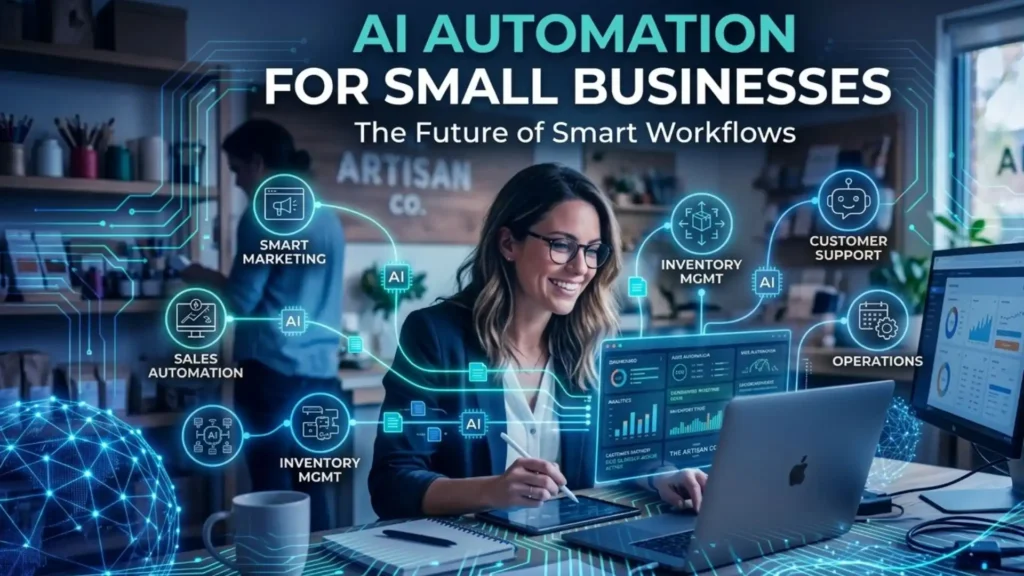
The business world is changing fast. From Fortune 500 companies to one-person startups, AI automation is quickly becoming the competitive edge that separates thriving businesses from those falling behind. If you are a small business owner or entrepreneur who has ever wished for a smarter way to handle repetitive work, this guide is written for you.
AI automation refers to the use of artificial intelligence technologies to perform tasks that previously required human effort — things like answering customer emails, scheduling meetings, generating invoices, or analyzing sales data. The growing adoption of AI automation tools means that even businesses with limited budgets can now access technology that was once exclusive to large corporations.
According to recent AI automation news and industry reports, over 70% of small businesses that adopt workflow automation see measurable improvements in productivity within the first six months. Yet many entrepreneurs still feel overwhelmed or confused about where to begin.
This guide will walk you through everything you need to know — from understanding what AI automation is and how it works, to the best tools available, practical steps to get started, and a look at the future of AI and automation for small businesses. No technical background required.
Table of Contents
1. What Is AI Automation?
So, what is AI automation? Simply put, it is the combination of artificial intelligence and automated processes to complete tasks without constant human intervention. Unlike traditional automation — which follows fixed, pre-programmed rules — AI automation can learn, adapt, and make decisions based on patterns in data.
Think of it this way: a traditional automation system might automatically send a thank-you email every time someone makes a purchase. An AI-powered system, however, can analyze that customer’s purchase history, predict what they might buy next, personalize the email message, and even decide the best time to send it — all on its own.
2. The Technology Behind AI Automation
At the heart of AI automation is machine learning — a branch of artificial intelligence where computers learn from data rather than being explicitly programmed for every scenario.
Machine learning algorithms analyze large amounts of data to identify patterns and make predictions. These algorithms power everything from spam filters in your email inbox to product recommendation engines on e-commerce sites.
Machine learning models are the outputs of this training process — they are the “brains” that make intelligent decisions. For example, a model trained on thousands of customer support conversations can learn to automatically respond to common questions.
Example: A small online store uses a machine learning model to predict which customers are likely to abandon their shopping cart. The system automatically sends a personalized discount code to those customers — recovering sales without any manual effort.
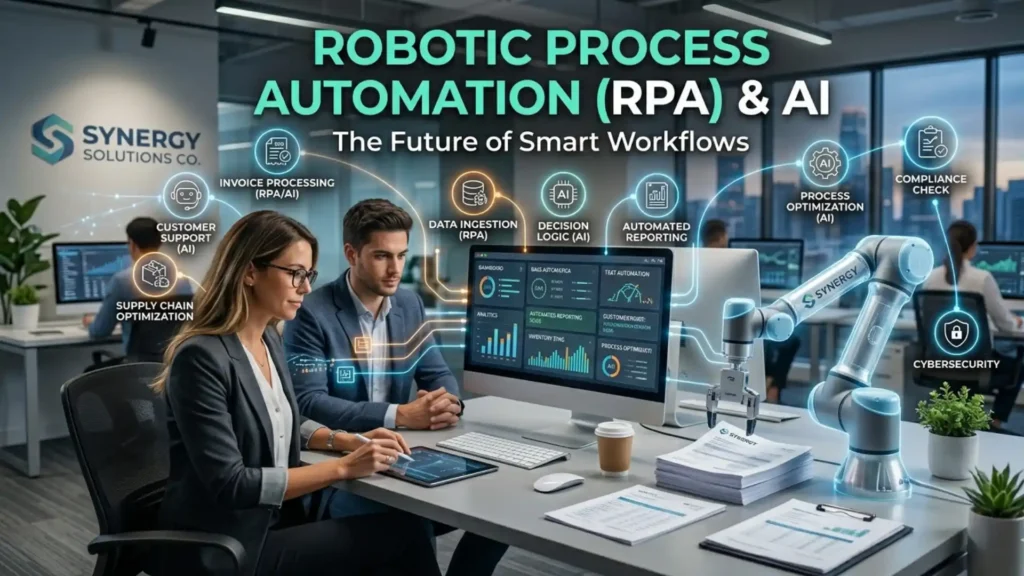
Is Robotic Process Automation AI?
A common question is: is robotic process automation AI? Not exactly. Robotic Process Automation (RPA) uses software bots to mimic repetitive human actions like clicking buttons or copying data. It follows fixed rules. AI automation goes further — it can understand context, handle exceptions, and improve over time. Many modern platforms combine both for powerful results.
3. Biggest Small Business Challenges That AI Can Solve
Before exploring solutions, it helps to understand the common challenges that make AI automation so valuable for small businesses:
• Limited Budget and Resources: Hiring a full team to handle every business function is expensive. Small businesses often rely on one or two people wearing multiple hats.
• Time-Consuming Manual Tasks: Sending emails, updating spreadsheets, generating reports, and responding to inquiries take hours every week — time that could be spent on growth.
• Lack of Technical Expertise: Many small business owners feel they need to be tech experts to use automation tools, which creates hesitation.
• Difficulty Scaling Operations: As a business grows, manual workflows break down. Without AI workflow automation, scaling becomes chaotic.
• Inefficient Workflows: Without automation, important tasks fall through the cracks. Leads go uncontacted, invoices are delayed, and customer service suffers.
• Data Handling Without Integration: Collecting and making sense of business data is nearly impossible without proper systems and API integration to connect different tools.
Key Insight: These challenges are not signs of a failing business — they are signs of a growing business that needs smarter systems.
4. Top Business Areas Where AI Automation Can Save Time and Increase Profit
AI-powered chatbots — often called an AI automation bot — can handle customer inquiries 24/7. Tools like Intercom, Tidio, and Drift use natural language processing to understand questions and provide instant answers, reducing your support workload by up to 80%.
AI Marketing Automation:
AI can segment your audience, schedule social media posts, personalize email campaigns, and even write ad copy. Platforms like HubSpot and Mailchimp use machine learning to optimize send times and content for higher engagement.
AI for Sales Automation and Smart Lead Generation:
AI tools can score leads automatically, predict which prospects are most likely to convert, follow up with personalized messages, and schedule sales calls — all without manual effort. This dramatically improves your sales pipeline efficiency.
Machine Learning in Finance:
This is where machine learning in finance shines. AI tools like QuickBooks and Xero use machine learning models to categorize transactions, detect unusual spending, forecast cash flow, and flag potential tax issues. What once required an accountant’s daily attention can be largely automated.
AI Automation for HR, Hiring, and Employee Onboarding:
AI can screen resumes, schedule interviews, send offer letters, and even onboard new employees using automated workflows. This saves HR teams dozens of hours per hire.
AI Automation for Inventory Management and Business Operations:
AI analyzes sales trends and automatically reorders stock before it runs out. It can also optimize delivery routes, predict equipment maintenance needs, and flag supply chain issues early.
Business Data Analysis Using Machine Learning Models and AI Analytics:
Rather than spending hours reading reports, machine learning models can process your business data and surface the insights that matter most — like which product is your highest margin item or which marketing channel drives the most conversions.
5. Best AI Automation Tools and Platforms for Small Businesses
One of the most popular platforms in AI automation is n8n — an open-source workflow automation tool that allows you to connect different apps and create automated pipelines without writing code. AI automation n8n is especially popular among small businesses because it is self-hostable and highly customizable.
Other top workflow automation platforms include:
• Zapier — connects over 6,000 apps with no-code automation triggers
• Make (formerly Integromat) — visual drag-and-drop workflow builder
• Microsoft Power Automate — great for businesses already using Microsoft 365
Best Free AI Automation Tools for Small Businesses Getting Started:
Many small businesses start with AI automation free solutions to test the waters before committing to paid plans. The best AI automation tools free options include:
• n8n Community Edition — free, self-hosted workflow automation
• Zapier Free Plan — limited automations at no cost
• HubSpot CRM Free — includes basic marketing and sales automation
• Tidio Free — AI chatbot for customer support
• Canva AI — free AI tools for content and design creation
APIs and AI Automation:
Many AI automation tools work through APIs. So, what is an API? API meaning: Application Programming Interface. In simple terms, it is a bridge that allows two different software applications to talk to each other and share data.
For example, the OpenAI API allows you to add powerful AI language features — like writing assistants, content generation, or intelligent chatbots — directly into your own business tools. Good API design ensures these integrations are secure, reliable, and scalable.
Practical Tip: If you are not technical, tools like Zapier and n8n let you connect APIs visually — no coding required. You can link your CRM to your email platform to your invoicing system in minutes.
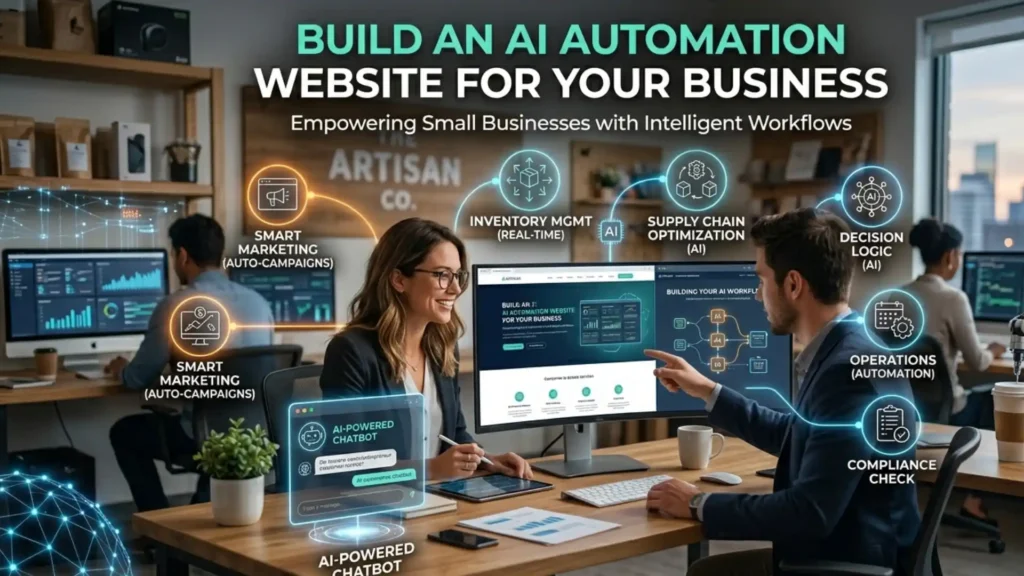
How to Build an AI Automation Website for Your Business:
If you want to offer AI-powered services or showcase your automation capabilities, building an AI automation website is a smart move. Platforms like Webflow combined with API integrations can create powerful, automated web experiences for your customers.
Do You Need an AI Automation Agency for Your Business Automation?
If setting up systems feels overwhelming, consider partnering with an AI automation agency — a specialized service provider that builds and manages automation workflows for your business. This is especially useful for complex multi-step integrations or when you need enterprise-grade reliability without building an in-house tech team.
6. How to Use AI to Automate Tasks
Understanding how to use AI to automate tasks does not have to be complicated. Follow these steps:
1. Identify Repetitive Tasks for AI Automation Opportunities
Start by listing the tasks you or your team do repeatedly every week. Common examples include: responding to customer inquiries, sending follow-up emails, data entry, scheduling appointments, and generating reports.
2. Choose the Best AI Automation Tools for Your Business Needs
Match each task to an appropriate AI automation tool. For emails, try tools like Superhuman or Gmail automation via Zapier. For customer chat, deploy a Tidio or Intercom bot. For AI workflow automation, n8n or Zapier can connect all your tools together.
3. Build Your First AI Workflow Automation System
Here is a simple example of how to automate tasks with AI using Zapier:
• Trigger: A new lead fills out your website contact form
• Action 1: Lead is automatically added to your CRM
• Action 2: A personalized welcome email is sent instantly
• Action 3: A task is created for your sales team to follow up in 48 hours
This entire workflow runs automatically, 24/7, without you lifting a finger.
4. Test, Monitor, and Optimize Your AI Automation Workflows
Always test your automations before going live. Monitor them regularly to ensure accuracy and make adjustments as your business evolves.
5. Scale and Expand Your AI Automation Systems Over Time
Start with one or two automations and build from there. As you get comfortable, you can create more sophisticated AI automation systems that connect your entire business ecosystem.
Real-World Use Case: A freelance marketing consultant uses n8n to automatically pull performance data from Google Ads, generate a weekly report using the OpenAI API, and email it to clients every Monday morning — saving 4 hours per week.
7. Top Benefits of AI Automation for Small Business
• Increased Efficiency and Productivity: Automated workflows complete tasks faster and without errors. Your team can focus on creative and strategic work instead of repetitive administration.
• Significant Cost Reduction: Automation replaces the need for additional headcount on routine tasks, reducing payroll expenses while maintaining or improving output quality.
• Better Decision-Making: Machine learning insights help you understand customer behavior, predict trends, and make data-driven decisions instead of guessing.
• Improved Customer Experience: Instant chatbot responses, personalized email campaigns, and faster order processing all contribute to a better customer journey — which drives loyalty and repeat business.
• Scalability for Growth: Automation systems can handle ten customers or ten thousand customers with the same ease. As your business grows, your automated workflows grow with it — no extra staffing required.
• Competitive Advantage: Small businesses that embrace AI and automation today are positioning themselves ahead of competitors who are still doing everything manually.
8. AI Automation Challenges and Risks
AI automation is powerful, but it is important to go in with realistic expectations. Here are some challenges to watch for:
• Initial Setup Costs: Some tools require upfront investment in subscriptions, integrations, or professional setup. However, many AI automation free options exist for businesses with tight budgets.
• Learning Curve: New tools take time to master. Budget time for training yourself or your team, especially for more complex platforms.
• Data Privacy and Security Concerns: When connecting tools via APIs, you share data between platforms. Always review the privacy policies of tools you use and ensure sensitive customer data is handled securely.
• Over-Reliance on Automation: Not every task should be automated. Customer relationships, creative thinking, and complex problem-solving still need a human touch.
• Integration Challenges: Not all tools connect seamlessly. Poor API design or incompatible platforms can create technical roadblocks.
• Outdated Information: The AI landscape evolves rapidly. Strategies that worked in 2022 may not be optimal today. Stay current with AI automation news and machine learning trends to keep your systems effective.
9. The Future of AI Automation and Machine Learning
Machine learning trends 2024 point to increasingly accessible and powerful AI for small businesses. Models are becoming cheaper to use, easier to deploy, and more accurate — even for niche industries.
Quantum Machine Learning:
Quantum machine learning — which combines quantum computing with AI — is an emerging frontier. While still largely experimental, it promises to dramatically accelerate how machines are learning and processing complex data. Small businesses won’t access it directly for years, but its downstream effects will reshape the AI tools available to everyone.
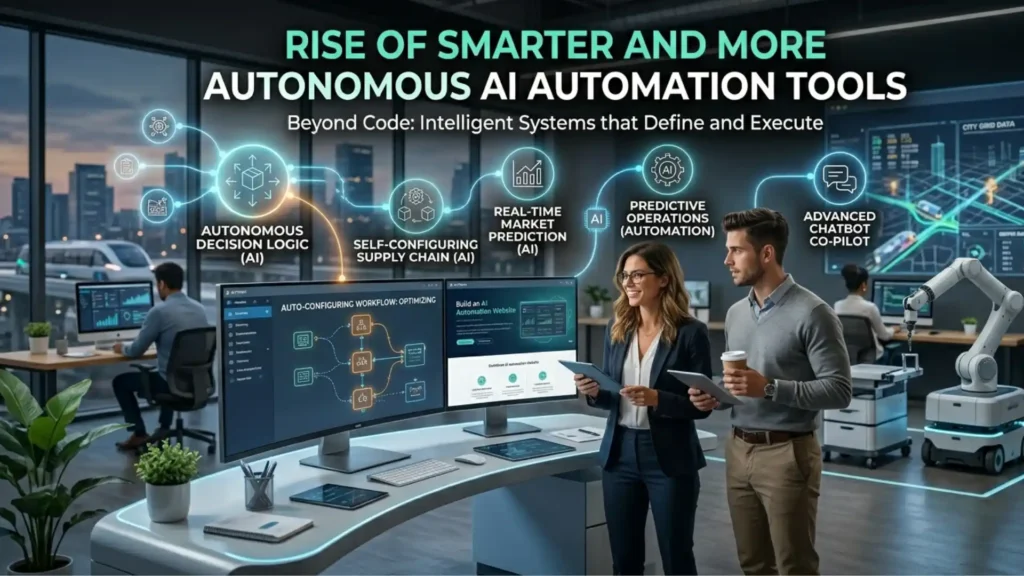
The Rise of Smarter and More Autonomous AI Automation Tools:
The next generation of AI automation tools will be increasingly autonomous — capable of monitoring their own performance, self-correcting errors, and proactively suggesting improvements to your workflows without any manual prompting.
Why AI Automation Agencies Will Become Essential for Businesses:
As demand for automation expertise grows, AI automation agencies will become standard partners for businesses of all sizes — similar to how web design agencies became essential in the early 2000s.
The Future of Connected Automation:
The future of business software is deeply connected through APIs. Every tool, platform, and data source will be accessible through standardized interfaces, making it easier than ever to build powerful, customized automation ecosystems tailored to your specific business needs.
Looking Ahead: Businesses that invest in understanding and implementing AI automation today will be far better positioned to take advantage of the even more powerful capabilities coming in the next three to five years.
10. Getting Started with AI Automation
AI automation is no longer a luxury reserved for large enterprises. Today, small businesses, startups, and solo entrepreneurs have access to powerful, affordable — and often free — tools that can transform how they work.
From deploying an AI automation bot to handle customer support, to using machine learning models to analyze your finances, to building automated workflows with n8n or Zapier — the opportunities are vast. The key is to start small, focus on your most painful bottlenecks, and build from there.
Whether you are just beginning to explore what is AI automation or you are ready to build sophisticated AI workflow automation systems, the journey starts with a single step: identifying one task you can automate today.
The businesses that thrive in the coming decade will be those that learn to work alongside AI — using it to amplify their human strengths, not replace them.
Ready to automate your business? Explore our AI automation services at T-Tech Solutions Lab Pvt Ltd and discover how we can help you build smarter workflows, faster.